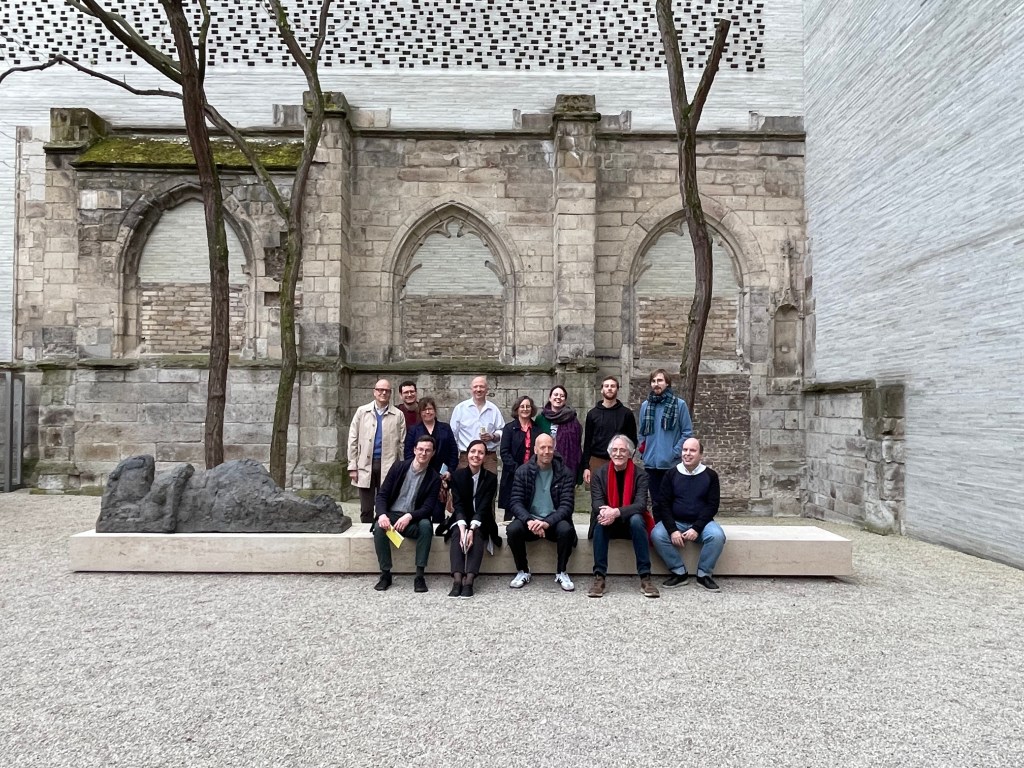
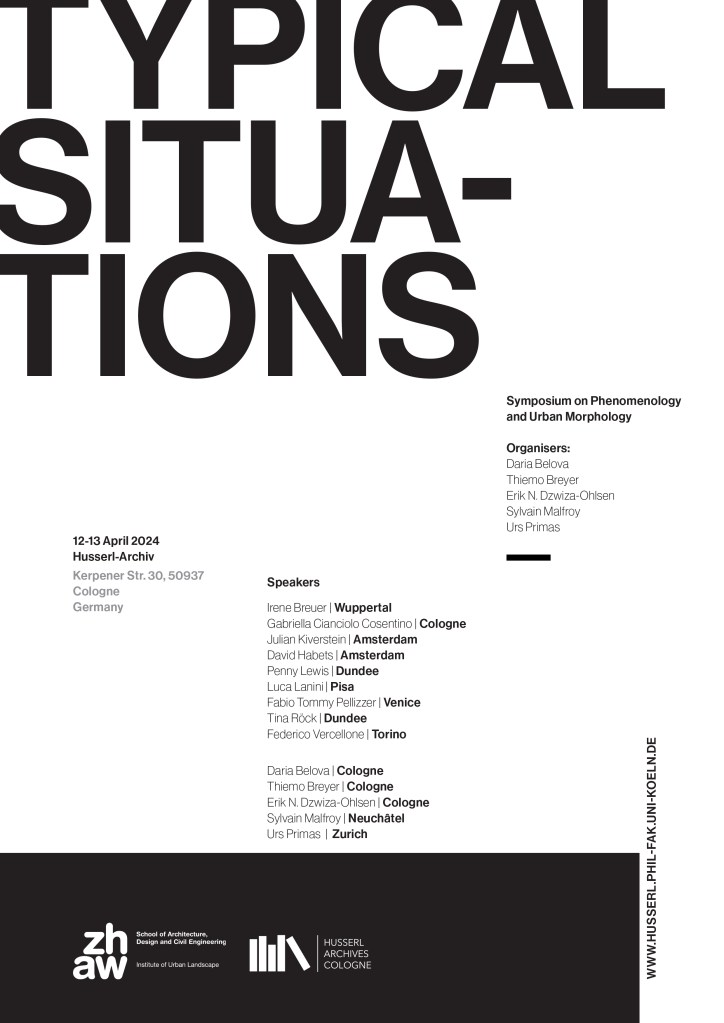
The world we live in is manifold, full of surprises, and constantly changing. Fortunately, it also offers a range of recurring and typical situations, thereby enabling us not to get lost, to experience the novel through the lens of the familiar and hence to develop a sense of feeling at home in the world. The study of typical situations in the built space has been a central contribution of Italian architects and urban researchers in the second half of the twentieth century. More than a century ago, the Austrian philosopher and founder of phenomenology Edmund Husserl applied the notion of type to denote a fundamental structuring element of human experience. Meanwhile, such related questions as the role of typification in human cognition and orientation has been underdeveloped within architecture and urban studies in general, and urban morphology in particular. The ability to recognise what kind of things are involved in any situation and to hold something new as an instance of a certain type is a fundamental human achievement that deserves to be focused on in urban morphology. As a newly formed team with a common interest in the interdisciplinary exchange between phenomenology and urban morphology, we aim to sharpen the understanding of the underlying notion of type as a fundamental structural property of the human lifeworld from two complementary viewpoints: architecture and urban morphology on the one hand, philosophy, and phenomenology on the other. The workshop was hold at Husserl Archives Cologne in April 2024 and included a number of activities that enhanced the discussion on the role of typification in human experience and the studies of urban form. This question touches on fundamental, philosophical issues regarding the relationship between subject and object, and taking it seriously imposes a broader approach, including research on orientation, affordances, and memory.


 Phenomenology & Urban Morphology